(The Career Education Pyramid}

Human needs arrange themselves in hierarchies of pre-potency. That is to say, the appearance of one need usually rests on the prior satisfaction of another, more pre-potent need. ~ Abraham Maslow
Kane’s Hierarchy of Career Education
I’ve included the quote above from Abraham Maslow because it’s quite obvious that I’ve taken the structure of Maslow’s Hierarchy of Needs as the foundation of the idea that I’m putting forward.
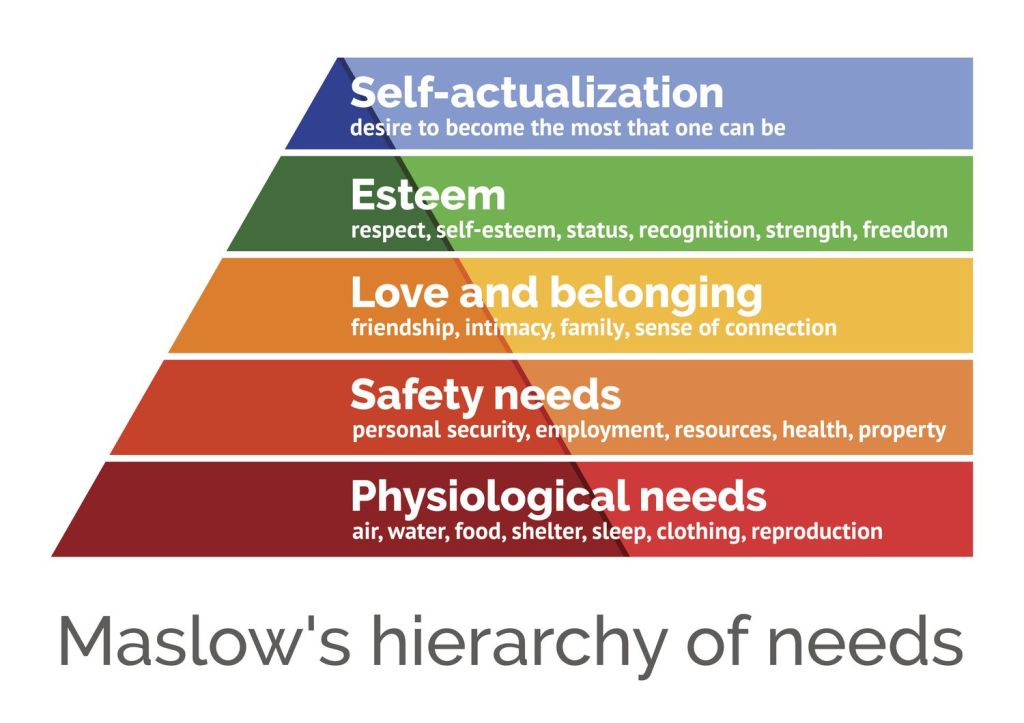
This theory came about from conversations I have been having with several of the Career Education professionals that I coach as part of my coaching business, as well as some of our workforce development and entrepreneurship folks. What these conversations have coalesced around is the question of what are the components of a really successful and effective career education program. I started thinking about the programs that I’ve managed over the last twenty-plus years working in Career Education and the model just sort of fell into place. So let’s take a look at it.
Much like Maslow’s Hierarchy of Needs, where each level of the pyramid builds up from the one below it, but only after that lower level need has been satisfied. The career education program hierarchy works similarly. And just like in Maslow’s Hierarchy nothing is perfect, you can satisfy some safety needs without all of your physiological needs being met. But in order to fully exist on the safety needs level, you have to have met all of your physiological needs.
Technical Proficiency
The base level of the Career Education Pyramid is technical proficiency. This is the level that many career education programs excel in. We typically hire career education instructors based on their demonstrated technical expertise. So in terms their subject matter, these folks know the hands-on aspect of their field incredibly well. They were often exceptional at being a welder, builder, cosmetologist, barber, mechanic, etc… They know what it takes to do the job they are instructing others to do better than most and can be very good at providing technical skill attainment.
Of course, as I discussed in a previous piece, Why Don’t We Train Community College Professors to Teach, quality instruction is a critical piece of the puzzle in building a high quality career education program. So it’s important that the technical experts we hire in these programs also possess the skills of a highly proficient instructor as well and if they don’t have them, we help them acquire them. This combination creates a career education program at the top of the base level of the Career Education Pyramid. This is also not an adequate level to exist at for the complex needs that today’s career education students possess.
Basic Employment Skills
What does basic employment skills mean? For at least the last decade, every time I have sat down in a room with employers, or been present for an employer’s panel or round table, the same subject would come up. Our students need to come out of our programs with more basic employment skills, what some would call soft-skills. What employers are usually getting at is that our students need to understand how to show up on time, meet deadlines, dress appropriately, talk to customers appropriately, have a positive work ethic, call in before their shift on days they will be out sick… Often these skills are also paired with basic customer service skill requirements including greeting customers, making them feel welcome, clear communication, effective listening, etc…
Over the last decade their have been a large number of state sponsored and third party programs developed to help career education programs infuse these types of skills into their curriculum. Much of this training has transitioned to online platform training from providers like Coursera or LinkedIn Learning. Regardless of the methodology or platform, most career education programs, after hearing the need for these basic employment skills from industry advisor boards and others, have implemented this type of training and skill development into their programs and often have infused it into their curriculum.
I would argue that the majority of our career education and technical training programs at most colleges live at the upper edge of this level. They do a good job with imparting technical proficiency and infusing some level, sometimes an excellent level, of basic employment skills into their programs. But for today’s students, is this good enough?
Professionalism
This is where we get into the upper levels of the hierarchy and where we begin to get into the true levels of career education and technical training excellence. So let’s be very clear what I mean by professionalism. Professionalism is the step above basic employment skills. It’s the level that starts to indicate that an employee can move up beyond entry-level work and potentially into a supervisory or management level position. The types of skills we are talking about at this level are leadership, people management, critical thinking, data analysis, advanced and system level problem solving, presentation skills etc…
Additionally, students need to be provided not just with the skills to be able to perform the jobs they are training for in school. But also be taught how to find, apply and successfully obtain those jobs. Resume writing or portfolio development appropriate to their field is critically important, as well as understanding how to best approach and be successful in an interview and how to solicit and develop excellent references.
Infusing the development of these types of skills into a career education program are a tall order. Often our career education and technical training programs are certificate based. This also means that often these programs are only one or two semesters in length, have deep technical requirements, and instructors are often pressed to meet all of these requirements in the time allotted, particularly when students are pursuing state licensing requirements. This makes it difficult to move a program to the professionalism level without outside partnerships. These partnerships can come in many different forms, through partnerships with career education departments, local workforce development boards or even industry or union groups.
It’s at this level that many apprenticeship programs fall in my eyes, and even more appropriately the recent trend in non-traditional apprenticeships. Apprenticeship programs provide both classroom and on the job training for technical attainment and basic employment skills. Often, particularly when apprentices are cohorted (as they often are in non-traditional apprenticeship programs) there are typically wrap-around supports, communities of practice and other training that work at the professionalism level. Additionally, in many more traditional union based apprenticeship models, there are progressive steps into higher positions with time in the job and additional training. I believe this is one reason that apprenticeship programs have begun to be focused on and funded much more heavily in recent years both in California and nationally. Apprenticeship is an excellent way to move a program into the professionalism level on the pyramid and truly serves our students. A program operating at the professionalism level is providing a high level of training and preparation not only for students at the entry-level or in the short-term, but it also sets them up very well for long-term career success.
Pro
In Maslow’s Hierarchy, the top level is self-actualization, it’s the point at which you’ve been satisfied all of the lower level needs and pulled all of the learning experience together to realize your greatest potential. That’s exactly what the pro level is in the career education pyramid. It’s when a program provides high quality instruction to help students develop high levels of technical skill attainment. A program where basic employment skills training has been fully integrated into the curriculum. Where the program, either internally or through the use of outside partners or an apprenticeship model, is infusing higher-level workforce employment skills and thinking into the program. This way students not only see themselves as technicians or entry-level workers but start to see, think about and work toward higher level training and positions.
The final piece in the pro level puzzle is imparting an entrepreneurial mindset into the students in the program. In some programs, this means literal training in the basics of entrepreneurship, again, like at the professionalism level this training can be embedded in the curriculum or developed in conjunction with campus or outside partners. This may also mean getting students to begin to think about higher level positions. Including management positions, system or corporate level positions or even starting their own business.
It is difficult for most programs to operate at this level. Often, our career education and technical training programs are at the community college (2-year) level. This can mean that you’re dealing with a large number of young, often just out of high school students. They often don’t have the maturity or the long-term mindset to operate at this level. More success can often be found with people who are moving from other career pathways. They are often older, more mature and have a greater amount of existing work experience which makes it easier for them to envision this higher level thinking. So in order to provide support, education and training at this level, often this is not embedded within the curriculum. This support often needs to be provided via partners, and optionally for those students who are truly ready for this level of support.
The purpose of all career education and technical training programs is to prepare students for jobs. To help them get those jobs and be successful. I believe we do students a disservice if we only support them at the basic employment skills level. It should be our goal to pursue the level excellence that we can provide for students at the professionalism level, with some options for our most ready students to be prepared for their career at the pro level.
 Higher Ed Mentor