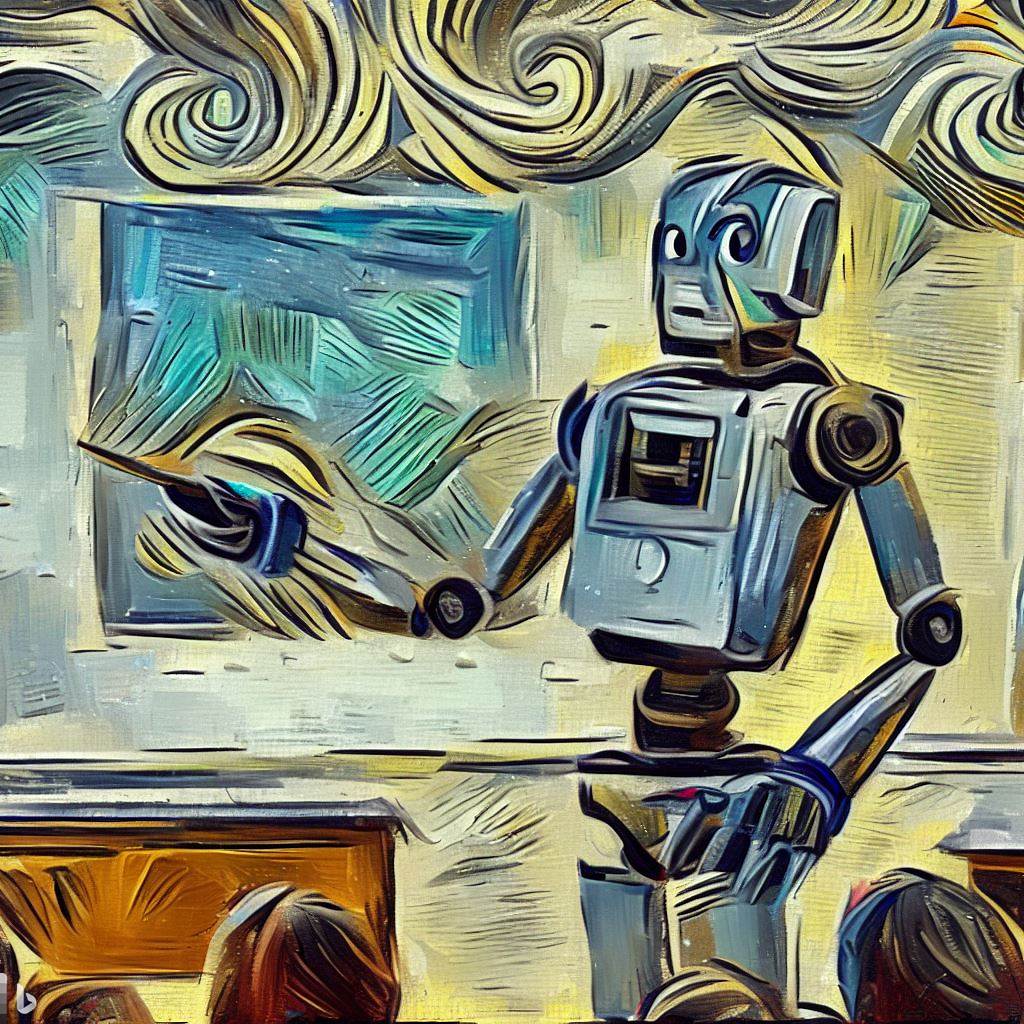
By their very nature, heuristic shortcuts will produce biases, and that is true for both humans and artificial intelligence, but the heuristics of AI are not necessarily the human ones. ~ Daniel Kahneman
Introduction to ChatGPT in Education
ChatGPT is an advanced conversational AI powered by the GPT-3.5 architecture developed by OpenAI. It has been designed to understand and generate human-like text responses, making it a valuable tool for various applications in education. With its ability to engage in interactive conversations and provide accurate and relevant information, ChatGPT can enhance the learning experience for students and educators alike.
One of the primary ways ChatGPT can be used in education is through personalized tutoring and support. By interacting with ChatGPT, students can receive instant responses to their queries, clarifications, or difficulties in understanding specific concepts. This personalized assistance can be available at any time, providing a flexible learning environment outside of traditional classroom settings. Moreover, ChatGPT can adapt its responses based on the individual needs and progress of each student, offering tailored guidance and explanations.
ChatGPT can also serve as a virtual assistant for teachers, offering assistance in lesson planning, curriculum development, and resource gathering. It can provide access to a vast amount of knowledge and educational materials, helping teachers find relevant information, examples, and references. This can save valuable time and effort, enabling educators to focus on designing engaging and effective learning experiences for their students.
Furthermore, ChatGPT can facilitate collaborative learning and group discussions. By acting as a mediator, it can encourage students to exchange ideas, ask questions, and explore different perspectives. This promotes active participation and critical thinking among students, fostering a dynamic and inclusive learning environment.
Additionally, ChatGPT’s natural language processing capabilities can be utilized to develop interactive educational content. It can be integrated into learning platforms, educational apps, or virtual learning environments to provide interactive lessons, quizzes, and simulations. This not only enhances the accessibility and interactivity of educational materials but also enables adaptive learning experiences tailored to the individual needs and progress of each student.
While ChatGPT offers significant potential in education, it is important to note that it should not replace human interaction and guidance. It should be seen as a complementary tool, augmenting the capabilities of teachers and providing additional support to students. The responsible integration of ChatGPT in education can lead to more personalized, engaging, and effective learning experiences, empowering students and educators alike.
What are the impacts in education?
ChatGPT, as an advanced language model, has the potential to significantly impact higher education in various ways. Here is a summary of the potential impact it can have:
- Enhanced learning experiences: ChatGPT can serve as a valuable tool for students, providing on-demand access to a vast amount of knowledge and resources. It can assist with answering questions, explaining complex concepts, and providing personalized learning experiences. Students can engage in interactive conversations with ChatGPT, receiving instant feedback and guidance tailored to their specific needs.
- Support for teachers and professors: ChatGPT can assist educators in several ways. It can help in creating course materials, generating assessment questions, and offering suggestions for instructional strategies. Additionally, it can provide teaching aids, offering immediate answers to common student queries and freeing up instructors’ time for more personalized interactions.
- Accessibility and inclusivity: Language barriers and learning disabilities can be significant barriers to education. ChatGPT can address these challenges by providing real-time language translation and accommodating diverse learning styles. It can offer content in various formats, such as audio or visual representations, to cater to individual needs and enhance accessibility for all students.
- Research and information retrieval: ChatGPT’s vast knowledge base and language processing capabilities make it a powerful resource for research and information retrieval. Students and researchers can utilize it to explore topics, find relevant literature, and gain insights from different perspectives. It can accelerate the process of gathering information, enabling more efficient and comprehensive research.
- Personalized tutoring and mentoring: ChatGPT can act as a virtual tutor or mentor, offering personalized support and guidance to students. It can adapt its responses based on individual learning preferences and provide continuous feedback to facilitate skill development and academic growth. This personalized approach can lead to improved learning outcomes and increased student engagement.
- Collaborative learning and peer interaction: ChatGPT can foster collaborative learning environments by facilitating group discussions and knowledge sharing. It can act as a mediator, encouraging students to interact with each other, exchange ideas, and solve problems collectively. This can promote critical thinking, teamwork, and the development of communication skills.
- Lifelong learning and professional development: Beyond formal education, ChatGPT can support individuals in their continuous learning journeys. It can provide access to up-to-date information, offer training modules, and assist in skill development across various domains. Professionals can utilize ChatGPT to stay informed, acquire new knowledge, and enhance their expertise throughout their careers.
However, it is important to acknowledge that ChatGPT’s impact on higher education also poses challenges. Concerns regarding the authenticity of information, overreliance on technology, and potential biases in the model’s responses need to be addressed. Additionally, ensuring the responsible use of AI technologies and maintaining a balance between human interaction and automated assistance will be crucial for maximizing the benefits of ChatGPT in higher education.
How to keep students from cheating using CHATGPT
Preventing students from using ChatGPT or similar language models to cheat requires a multi-faceted approach that combines technological solutions, educational strategies, and a focus on ethical conduct. Here are some strategies educators can employ:
- Promote ethical behavior: Educate students about the importance of academic integrity and the consequences of cheating. Discuss the ethical implications of using AI language models to gain an unfair advantage in assessments.
- Clearly define cheating policies: Establish clear and comprehensive policies on cheating, plagiarism, and the use of unauthorized resources. Communicate these policies to students and ensure they understand the consequences of violating them.
- Create personalized assessments: Design assessments that require critical thinking, problem-solving, and application of knowledge. Use questions that demand original thought and cannot be easily answered by relying solely on AI-generated responses.
- Utilize alternative assessment methods: Incorporate diverse assessment methods that are difficult to cheat on using AI. This can include practical demonstrations, presentations, group projects, open-ended questions, or real-world application tasks.
- Monitor online activity: Keep a watchful eye on students’ online activities during assessments. Use plagiarism detection tools to identify similarities between students’ responses and online sources.
- Encourage classroom discussions: Foster a collaborative and engaging learning environment where students are encouraged to discuss and debate topics. Active class participation can help gauge individual understanding and expose knowledge gaps that cheating cannot compensate for.
- Develop individualized assignments: Assign tasks that require students to apply their own experiences, perspectives, and creativity. This makes it difficult for them to rely solely on pre-generated AI responses.
- Teach critical thinking skills: Emphasize the importance of critical thinking, analysis, and problem-solving abilities. Encourage students to question information, evaluate sources, and provide evidence-based arguments.
- Use in-class assessments: Conduct in-class quizzes or exams where students cannot access external resources or use AI models. This helps ensure that students are demonstrating their own knowledge and skills.
- Engage in ongoing discussions about AI ethics: Continuously discuss the ethical implications of using AI language models for academic purposes. Encourage students to reflect on the potential negative consequences of cheating and the importance of genuine learning.
- Stay up-to-date with technology: Educators should familiarize themselves with emerging AI technologies, including language models, to better understand how students might attempt to cheat. This knowledge can help inform prevention strategies.
It’s important to note that while these strategies can discourage cheating, there is no foolproof method to completely eliminate cheating. However, by combining these approaches and fostering a culture of academic integrity, educators can mitigate the risk of students misusing AI language models for cheating purposes.
Well if you’ve read this far congratulations, here’s the prize. Everything above this paragraph was in fact written by CHATGPT. Below are the prompts that I provided to CHATGPT for each of the sections.
Write a brief introduction to what ChatGPT is and how it might be used in education.
Write a summary of the impact that ChatGPT can have on higher education.
How can educators effectively prevent students from using ChatGPT to cheat?
Beyond the prompts I provided, all I did was a little bit of quick editing and lay in the section headers. We are definitely living in interesting times in education. The intersection of the pandemic and the arrival of easily accessible AI is creating a completely new environment in education. With most new technology, as educators, we have a choice to either learn about and use it, or get left behind. Oh and the image on top of the piece was done by AI as well.
I also asked ChatGPT to provide a list of resources to help us get a good background on the topic including links.
- “Artificial Intelligence: A Modern Approach” by Stuart Russell and Peter Norvig.
- “Deep Learning” by Ian Goodfellow, Yoshua Bengio, and Aaron Courville.
- “Superintelligence: Paths, Dangers, Strategies” by Nick Bostrom.
- “Machine Learning Yearning” by Andrew Ng.
- “Artificial Intelligence: Foundations of Computational Agents” by David L. Poole and Alan K. Mackworth.
- “Pattern Recognition and Machine Learning” by Christopher M. Bishop.
- “The Hundred-Page Machine Learning Book” by Andriy Burkov.
- Link: https://themlbook.com/
- “AI Crash Course” by Google AI.
- “Deep Learning for Coders with fastai and PyTorch” by Jeremy Howard and Sylvain Gugger.
- Link: https://course.fast.ai/
- “Reinforcement Learning: An Introduction” by Richard S. Sutton and Andrew G. Barto.
These resources cover a wide range of topics in AI, including machine learning, deep learning, ethics, and practical applications. They should provide you with a solid foundation to understand AI concepts and technologies.
 Higher Ed Mentor